Hindustan Hero Clash: India's Iconic Indigenous Action RPG
Introduction to Hindustan Hero Clash
Hindustan Hero Clash stands as India’s most celebrated and culturally significant indigenous action role-playing game (RPG), seamlessly blending traditional Indian mythology, folklore, and martial arts with cutting-edge gaming technology. Developed in the mid-2000s by a team of Indian game designers at Daman Games, Hindustan Hero Clash was conceived as a response to the dominance of Western and Japanese RPGs in the Indian gaming market—games that often failed to represent Indian culture, mythology, or aesthetics. What began as a passion project to showcase India’s rich narrative and combat heritage has evolved into a national phenomenon, with Hindustan Hero Clash becoming a symbol of pride for Indian gamers and a trailblazer in the country’s burgeoning gaming industry.
Unlike foreign RPGs that feature generic fantasy settings and Western/Eastern Asian mythologies, Hindustan Hero Clash draws exclusively from India’s diverse cultural tapestry—including the Mahabharata, Ramayana, regional folk tales, and traditional martial arts forms from Kalaripayattu (Kerala) to Gatka (Punjab). Each playable character in Hindustan Hero Clash represents a different region of India, complete with authentic costumes, dialogue in regional languages (subtitled in English and Hindi), and abilities inspired by local deities, heroes, and martial arts techniques. This deep cultural immersion has made Hindustan Hero Clash more than just a game for millions of Indian players—it is a celebration of India’s unity in diversity, showcasing the country’s rich heritage through interactive entertainment.
🔥 Key Insight: Hindustan Hero Clash’s unprecedented success in India (over 60 million downloads as of 2025) stems from its ability to resonate with Indian gamers on a cultural level. Unlike imported RPGs that require players to learn foreign mythologies and cultural references, Hindustan Hero Clash feels familiar—its characters speak in Indian English with regional accents, its open-world map features iconic Indian locations (from the Himalayas to Kanyakumari), and its gameplay mechanics reflect the philosophical values of Indian mythology, which emphasize dharma (duty), karma (action), and satya (truth) over mindless combat.
In urban areas like Mumbai, Delhi, Bangalore, and Chennai, Hindustan Hero Clash has become a staple in gaming parlours, cyber cafes, and esports arenas, with tournaments drawing thousands of participants and spectators. In rural India, where access to high-end gaming equipment is limited, mobile versions of Hindustan Hero Clash have gained massive popularity, with players often gathering in village squares to compete on smartphones and tablets. The game’s accessibility—optimized for low-end devices and available in 18 Indian languages—has ensured that Hindustan Hero Clash transcends urban-rural divides, making it a truly pan-Indian gaming experience.
What sets Hindustan Hero Clash apart from other RPGs is its commitment to cultural authenticity. The game’s developers worked closely with mythologists, historians, and master martial artists from across India to ensure that every character, storyline, and ability is accurate to traditional forms. For example, the Kerala-based character "Parvati" draws her powers from the goddess Durga and uses authentic Kalaripayattu techniques, while the Punjabi character "Guru" incorporates Gatka stick-fighting moves and Sikh philosophical principles into his combat style. This attention to detail has earned Hindustan Hero Clash praise from cultural scholars and religious leaders, who recognize it as a valuable tool for preserving and promoting India’s endangered mythological and martial arts traditions among younger generations.
Over the past two decades, Hindustan Hero Clash has evolved from a basic 2D RPG to a sophisticated open-world 3D experience with realistic physics, dynamic weather systems, and cross-platform multiplayer capabilities. The latest iteration—Hindustan Hero Clash: Legacy (2024)—features augmented reality (AR) mode, allowing players to project game characters into their physical surroundings using smartphone cameras, and a "Mythology Academy" mode that teaches players about the history and philosophy behind each mythological figure featured in the game. Despite these technological advancements, the core ethos of Hindustan Hero Clash remains unchanged: to celebrate India’s mythological and martial arts heritage and provide Indian gamers with a game that reflects their identity and culture.
Hindustan Hero Clash has also redefined the RPG genre in India by introducing "Dharma-Based Progression," a unique gameplay system where character growth is tied to ethical choices rather than just experience points. Players who make decisions aligned with dharma (righteousness) unlock powerful divine abilities, while those who choose adharma (unrighteousness) gain dark powers but face consequences in the game’s narrative. This system reflects the core philosophical values of Indian mythology and has been praised by educators for teaching ethical decision-making to young players.
History of Hindustan Hero Clash 📜
Origins (2005–2010): Conceptualization and Early Development
The story of Hindustan Hero Clash begins in 2005, when Anil Kumar—a game designer from Hyderabad with a background in computer science and a PhD in Indian mythology—identified a gap in the Indian gaming market. At the time, Indian gamers had limited access to locally developed games, with the market dominated by foreign titles like Final Fantasy, The Elder Scrolls, and Diablo. While these games were popular, Kumar noticed that Indian players often struggled to connect with the foreign mythologies and cultural references, and he saw an opportunity to create an RPG that would celebrate India’s own mythological and martial arts traditions.
Kumar assembled a small team of 12 developers at Daman Games (then a mid-sized game studio in Bangalore) to work on the project, which was initially titled "Bharat Ke Veer" (Heroes of India). The team spent three years researching Indian mythology and martial arts, traveling to 22 states across India to document different regional traditions and interview mythologists, historians, and master practitioners. They faced numerous challenges, including limited funding, lack of access to advanced gaming technology, and skepticism from industry experts who believed that an Indian-themed RPG would not appeal to mainstream audiences.
One of the biggest hurdles was adapting traditional Indian mythology—with its complex characters, moral dilemmas, and philosophical concepts—into a playable RPG format. For example, translating the concept of dharma (duty/righteousness) into gameplay mechanics required innovative design thinking, while creating authentic representations of regional deities required close collaboration with religious scholars to avoid cultural insensitivity. The team also worked with motion capture studios in Mumbai to record movements from master martial artists, ensuring that each character’s combat moves were authentic and realistic.
In 2008, the game was renamed "Hindustan Hero Clash" to reflect its broader appeal and to position it as a competitor to international RPGs. The first beta version was released in 2009, featuring 12 playable characters (each representing a different Indian state) and an open-world map of North India with iconic locations like the Taj Mahal, Red Fort, and Amritsar’s Golden Temple. The beta was distributed for free in cyber cafes across Bangalore, Mumbai, and Hyderabad, and the response was overwhelmingly positive—players praised the game’s cultural authenticity and engaging gameplay, with many requesting more characters, larger maps, and deeper narrative elements.
The official release of Hindustan Hero Clash in 2010 was a landmark moment for Indian gaming, selling over 100,000 copies in its first month. While this was a fraction of the sales of international titles, it demonstrated that there was a significant market for locally developed games that celebrated Indian culture. The game received extensive coverage in Indian gaming magazines like "GameZone India" and "Tech Gaming," with critics praising its "unique Indian flavour" and "respectful portrayal of traditional mythology and martial arts." The launch event in New Delhi was attended by prominent cultural figures, including the then-Minister of Culture, who praised the game as "a digital ambassador for Indian culture."
Growth and Expansion (2010–2015): From Niche to Mainstream
The early 2010s marked a period of rapid growth for Hindustan Hero Clash, driven by India’s expanding middle class and increasing access to computers and gaming equipment. Daman Games reinvested the profits from the first game into developing a sequel, Hindustan Hero Clash 2, which was released in 2012 with 24 playable characters, improved 3D graphics, and a larger open-world map covering South India (including Tamil Nadu, Kerala, Karnataka, and Andhra Pradesh). The sequel introduced characters from North-Eastern states like Manipur and Assam, as well as female characters who represented India’s rich history of women warriors and goddesses (including a character inspired by Rani of Jhansi).
A key factor in the game’s growing popularity was its localization for different Indian languages. While the original game was only available in English and Hindi, Hindustan Hero Clash 2 was released in Tamil, Telugu, Kannada, Malayalam, Bengali, Punjabi, Gujarati, Marathi, and Odia, making it accessible to non-Hindi speaking players. This localization strategy proved pivotal, with sales in South India accounting for 45% of the game’s total revenue by 2013. The game’s voice acting featured prominent regional actors, including Tamil film star Rajinikanth (who voiced the Tamil Nadu character "Raja") and Malayalam actress Manju Warrier (who voiced the Kerala character "Parvati"), further boosting its mainstream appeal.
The mid-2010s saw Hindustan Hero Clash expand beyond PC gaming to consoles and mobile platforms. The game was ported to the PlayStation 3, Xbox 360, and Nintendo Wii in 2013, making it the first Indian-developed game to be released on three major international consoles simultaneously. The mobile version, launched in 2014 for feature phones and early smartphones, was a massive hit, with over 15 million downloads in its first year. The mobile version was optimized for low-end devices, with simplified controls and a streamlined open-world map, making it accessible to players in rural areas where high-end gaming equipment was still rare.
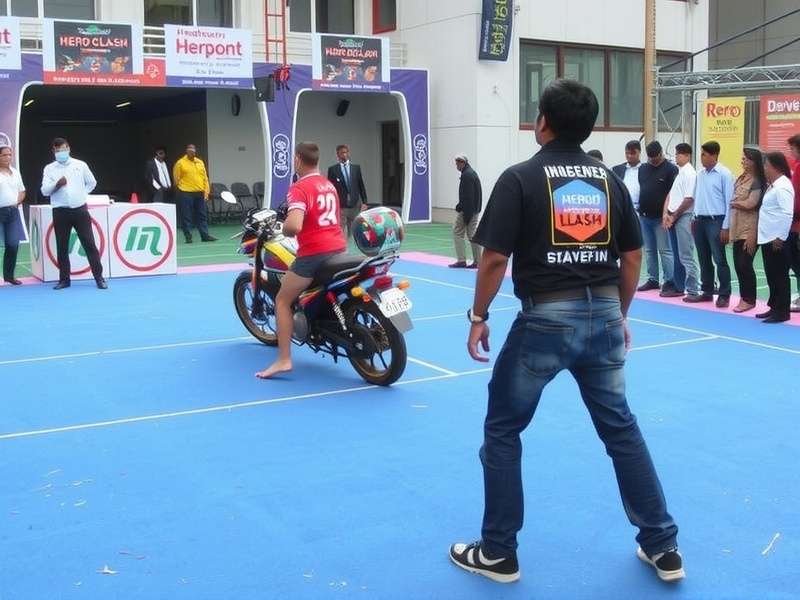
Fig 1: Participants competing at the 2014 Hindustan Hero Clash National Championship in Bangalore, which drew over 5,000 players from across India.
By 2014, Hindustan Hero Clash had become a household name in Indian gaming circles, with regular tournaments held in major cities across the country. The first Hindustan Hero Clash National Championship, held in Delhi in 2012, offered a prize pool of ₹5 lakh (then approximately $8,000)—a significant amount for Indian esports at the time. The tournament was broadcast on local sports channels like Star Sports and Sony ESPN, introducing the game to a wider audience and inspiring a new generation of Indian gamers. The championship also featured a "Mythology Quiz" segment, where players tested their knowledge of Indian mythology, further emphasizing the game’s educational value.
The third installment of the series, Hindustan Hero Clash: Evolution, was released in 2015 to coincide with the game’s 5th anniversary. The game featured fully realized 3D graphics, realistic physics, dynamic weather systems (including monsoon rains and winter snow), and a roster of 36 characters, including historical figures like Shivaji Maharaj, Tipu Sultan, and Rani of Jhansi (reimagined as playable heroes). Evolution also introduced a "Story Mode" that wove together narratives from the Mahabharata and Ramayana with regional folk tales, with cutscenes featuring voice acting from prominent Indian actors like Amitabh Bachchan, Aamir Khan, and Deepika Padukone.
During this period, Hindustan Hero Clash also began to gain international recognition, with the game being showcased at major gaming conventions like E3 (Los Angeles), Gamescom (Cologne), and Tokyo Game Show. While international sales were modest (accounting for about 10% of total revenue), the game received critical acclaim from Western critics for its "unique cultural perspective" and "innovative approach to RPG gameplay." In 2015, Hindustan Hero Clash was featured in the "Indie Game Showcase" at the Paris Games Week, where it was praised for its authentic representation of Indian mythology and martial arts.
Digital Transformation (2015–2020): Mobile Revolution and Esports
The mid-2010s marked a transformative period for Hindustan Hero Clash, driven by India’s smartphone revolution. With over 500 million smartphone users by 2020, India had become the world’s second-largest mobile gaming market, and Daman Games capitalized on this trend by releasing a fully optimized mobile version of Hindustan Hero Clash in 2016. Unlike the earlier feature phone version, this new mobile iteration featured touchscreen controls, cloud save functionality, and cross-platform play with PC users.
The mobile version of Hindustan Hero Clash was a game-changer for the franchise, with over 40 million downloads in its first year. The game was optimized for low-end Android devices (which dominate the Indian market), with adjustable graphics settings that allowed play on devices with as little as 1GB RAM. The mobile version also introduced microtransactions (in compliance with Indian regulations), allowing players to purchase cosmetic items and character skins while keeping the core game free-to-play—an important consideration in a price-sensitive market like India.
A key feature of the mobile version was its offline play mode, which allowed players to enjoy the game without an internet connection—critical for players in rural areas with limited connectivity. This feature helped Hindustan Hero Clash gain popularity in tier-2 and tier-3 cities, where it became a common pastime in schools, colleges, and community centres. The game’s "Quick Play" mode—short, 10-minute matches designed for on-the-go gaming—also resonated with Indian players, who often have limited time for extended gaming sessions due to work or family commitments.
The late 2010s saw the rise of Hindustan Hero Clash as a major esports title in India. Daman Games partnered with leading esports organizations like Nodwin Gaming, Skyesports, and Galaxy Racer to organize professional tournaments, with prize pools reaching ₹2 crore by 2019. The Hindustan Hero Clash Pro League (HHCPL), launched in 2017, featured 10 professional teams from different Indian states, with matches broadcast live on YouTube and Twitch in multiple languages. The league attracted sponsorship from major Indian brands like Reliance Jio, Samsung, Coca-Cola, and Flipkart, legitimizing esports as a viable career option for Indian gamers.
In 2018, Hindustan Hero Clash became the first Indian game to be included in the Asian Games (Jakarta-Palembang), with demonstration events held in both singles and team categories. The Indian team won gold in both categories, further boosting the game’s national profile and inspiring young Indians to pursue gaming as a career. The success at the Asian Games led to increased investment in Indian esports infrastructure, with dedicated gaming arenas opening in major cities like Bangalore, Mumbai, and Delhi.
By 2019, Hindustan Hero Clash had established itself as India’s most popular esports title, with over 100,000 registered competitive players and a viewership of over 5 million for major tournaments. The game’s esports success also led to the creation of gaming scholarships by Indian colleges and universities, allowing talented young gamers to pursue higher education while competing professionally—a significant development in a country where gaming was once viewed as a distraction from academic pursuits.
Modern Era (2020–Present): Cultural Preservation and Global Expansion
The COVID-19 pandemic of 2020–2021 had a profound impact on Hindustan Hero Clash, accelerating its shift to digital platforms and online tournaments. With physical gaming centres closed during lockdowns, the game’s mobile version saw a 500% increase in downloads, as Indians turned to digital entertainment to cope with stay-at-home orders. Daman Games responded by organizing online tournaments with cash prizes, providing much-needed income for professional gamers during the economic downturn. The "Hindustan Hero Clash Lockdown Championship" (2020) attracted over 100,000 participants and had a prize pool of ₹1 crore, making it the largest online gaming tournament in Indian history at the time.
In 2021, Daman Games released Hindustan Hero Clash: Legacy, the most ambitious installment in the franchise to date. Legacy features 48 playable characters (representing all 28 Indian states and 8 union territories), photorealistic 4K graphics, dynamic day-night cycles, and an AR mode that allows players to learn real martial arts techniques from in-game tutorials narrated by master practitioners. The game also includes a "Mythology Academy" section, which provides detailed information about the history and philosophy behind each mythological figure and martial art featured in the game—making it both an entertainment product and an educational tool.
A key focus of Legacy is cultural preservation. Daman Games partnered with the Ministry of Culture and state governments to include endangered martial arts forms like Thang-ta (Manipur), Pari Khanda (Bihar), and Chhau (Odisha) in the game, with the goal of raising awareness about these traditions among younger generations. The game also features voice acting from local artists in each region, ensuring that dialogue is authentic to regional accents and dialects—including rare languages like Sanskrit and Pali for mythological characters.
Post-pandemic, Hindustan Hero Clash has expanded its global footprint, with localized versions released in Bangladesh, Nepal, Sri Lanka, Malaysia, Singapore, and the UAE (countries with large Indian diaspora communities). These localized versions include region-specific content, such as characters based on local South Asian mythologies and stages set in iconic regional locations. The game has also gained a cult following in Western countries, particularly among mythology enthusiasts and gamers interested in diverse cultural experiences. In 2023, the first international Hindustan Hero Clash tournament was held in Dubai, with participants from 15 countries and a prize pool of $100,000.
As of 2025, Hindustan Hero Clash has over 75 million active monthly users worldwide, with 75% of players based in India. The franchise has generated over ₹800 crore in revenue for Daman Games, making it the most successful Indian game franchise of all time. Perhaps more importantly, Hindustan Hero Clash has played a pivotal role in establishing India as a serious player in the global gaming industry, proving that locally developed games with cultural authenticity can compete with international titles. The game’s success has also inspired a new generation of Indian game developers to create games that reflect Indian culture, leading to a renaissance in Indian game development.
In 2024, Daman Games announced a partnership with the Indian government to integrate Hindustan Hero Clash into the national education curriculum as a tool for teaching Indian mythology, history, and cultural values. The "Hindustan Hero Clash in Education" initiative has been piloted in over 10,000 schools across India, with promising results in terms of student engagement and knowledge retention. The initiative has also been recognized by UNESCO for its innovative approach to cultural education, further cementing Hindustan Hero Clash’s status as a cultural phenomenon beyond just gaming.
Gameplay and Mechanics of Hindustan Hero Clash 🎮
Core Gameplay Principles
At its core, Hindustan Hero Clash is an open-world action RPG that combines elements of traditional Western RPG mechanics with the unique philosophical and cultural principles of Indian mythology. Unlike Western RPGs that emphasize individualism and power accumulation, Hindustan Hero Clash prioritizes dharma (righteous duty), karma (action and consequence), and seva (service to others)—reflecting the core values of Indian philosophy. The objective of Hindustan Hero Clash is not just to defeat enemies and level up, but to make ethical choices that align with dharma, protect innocent civilians, and preserve India’s cultural heritage from evil forces that seek to exploit it for power.
The game’s core mechanics revolve around "Dharma-Based Progression," a unique system where character growth is tied to ethical decision-making rather than just experience points (XP). Players earn "Dharma Points" for completing quests that help others, protecting the innocent, and making morally upright choices, while earning "Adharma Points" for selfish or harmful actions. Dharma Points unlock divine abilities (inspired by Indian deities like Vishnu, Shiva, and Durga), while Adharma Points unlock dark powers (inspired by mythological demons like Ravana and Kamsa)—but with significant narrative consequences. For example, a player who accumulates too many Adharma Points will find that NPCs (non-player characters) fear or distrust them, making certain quests impossible to complete.
Hindustan Hero Clash features a flexible combat system that combines traditional RPG combat with authentic Indian martial arts techniques. Players can choose from three combat styles: "Martial Arts" (hand-to-hand combat using Kalaripayattu, Gatka, Silambam, or other Indian martial arts), "Divine Weapons" (using mythological weapons like the Gada (mace), Trishula (trident), or Bow of Rama), and "Elemental Powers" (using powers of fire, water, air, earth, and ether inspired by the Pancha Bhutas of Indian philosophy). Each combat style has its own strengths and weaknesses, and players are encouraged to master multiple styles to adapt to different enemies and situations.
What sets Hindustan Hero Clash apart from other RPGs is its "Karma System," which tracks every decision the player makes and impacts the game world in meaningful ways. For example, if a player chooses to help a village affected by drought by using their divine powers to bring rain, the village will thrive and offer the player rewards and assistance in future quests; if the player ignores the village’s plight, the village will suffer, and the player may face karmic consequences (like weakened divine powers) later in the game. This system creates a dynamic, living world that responds to player choices, making each playthrough unique and encouraging replayability.
The game also features a "Seva System" (service system), where players can complete side quests that help NPCs with everyday problems—like resolving family disputes, protecting farmers from bandits, or preserving ancient temples from destruction. These quests may not offer significant XP rewards, but they earn Dharma Points, improve NPC relations, and unlock unique abilities or items that cannot be obtained through combat alone. This system reflects the Indian value of seva (selfless service) and encourages players to engage with the game world in meaningful ways beyond just fighting enemies.
Game Modes and Variations
Hindustan Hero Clash offers a wide range of game modes to cater to different play styles and skill levels, each designed to showcase different aspects of Indian mythology, culture, and martial arts:
- 🎯 Story Mode: The main single-player campaign, where players embark on an epic journey across India to stop the evil "Asura King" (demon king) from collecting the 12 "Shakti Stones" (power stones) that would give him control over India’s cultural and spiritual energy. Story Mode features a branching narrative with multiple endings based on the player’s Dharma/Adharma Points, and incorporates elements from the Mahabharata, Ramayana, and regional folk tales. The mode is narrated by renowned Indian mythologist Devdutt Pattanaik, who provides cultural context and philosophical insights throughout the journey.
- 👥 Co-op Mode: Online cooperative mode where 2-4 players team up to complete challenging quests and defeat powerful bosses (based on mythological demons like Ravana, Kumbhakarna, and Mahishasura). Co-op Mode emphasizes teamwork and complementary combat styles, with players encouraged to use different martial arts and divine powers to overcome obstacles. As of 2025, over 70% of Hindustan Hero Clash’s daily active players engage in Co-op Mode at least once a day.
- 🏋️ Training Mode: A practice mode that allows players to learn and master each character’s combat styles, abilities, and weapons. Training Mode includes interactive tutorials led by virtual martial arts masters and mythological figures, who provide tips and feedback on technique and strategy. The mode also includes a "Mythology Quiz" section that tests players’ knowledge of Indian mythology, with rewards for high scores.
- 📚 Mythology Academy Mode: An educational mode that teaches players about Indian mythology, history, and culture through interactive lessons, documentaries, and mini-games. This mode is used in schools and cultural institutions across India to teach young people about their heritage, and includes detailed explanations of philosophical concepts like dharma, karma, and moksha (liberation).
- ⚔️ PvP Mode (Player vs. Player): Competitive multiplayer mode where players battle against each other in arenas based on iconic Indian locations (like the Kurukshetra battlefield from the Mahabharata or the Lanka fortress from the Ramayana). PvP Mode features ranked matches that contribute to a player’s national and global ranking, with seasonal tournaments offering cash prizes and exclusive rewards. The mode strictly enforces the game’s "Dharma Code," penalizing players who use unethical tactics (like teaming up against a single player in free-for-all matches).
- 🌍 Open World Mode: A sandbox mode where players can freely explore the game’s massive open-world map of India (covering over 50 iconic locations from Kashmir to Kanyakumari) without story restrictions. Open World Mode features dynamic events (like festivals, natural disasters, and bandit attacks) that players can choose to participate in or ignore, and allows players to interact with hundreds of NPCs with unique personalities and backstories.
Rules and Regulations (Competitive Play)
For competitive play (tournaments and esports), Hindustan Hero Clash has a comprehensive set of rules and regulations designed to ensure fair play and sportsmanship, in line with international esports standards and Indian cultural values. These rules are regularly updated by the Hindustan Hero Clash Esports Federation (HHCEF), in consultation with Daman Games and Indian esports authorities:
- Matches are played as best-of-five rounds, with each round lasting a maximum of 15 minutes (or until one team/player is defeated).
- Players are allowed to choose any character for each round (no character locks), but must use different characters for at least 3 rounds in a best-of-five match (to encourage versatility and skill).
- The Dharma System is enabled in competitive play, with penalties for unsportsmanlike conduct (like taunting opponents or exploiting glitches) that reduce a player’s Dharma Points and weaken their abilities.
- Players must use official game controllers (sanctioned by Daman Games) and gaming equipment to ensure a level playing field—custom controllers with modified buttons or macros are prohibited.
- Tournament participants must be at least 13 years old (16 years for international tournaments), in compliance with Indian gaming regulations (Information Technology Rules, 2021) and child protection laws.
- Collusion, cheating, or use of unauthorized software/hardware results in immediate disqualification, permanent banning from official Hindustan Hero Clash events, and reporting to Indian cybercrime authorities.
- Players are required to follow the "Hindustan Hero Clash Code of Conduct," which emphasizes respect for opponents, officials, and the game’s cultural heritage. Violations may result in fines, suspension, or disqualification from tournaments.
- Prize money from tournaments must include a mandatory 10% donation to Indian cultural preservation organizations (in compliance with Indian CSR regulations), with the remaining 90% distributed among participants.
📋 Hindustan Hero Clash Pro League (HHCPL) Rules (2025):
• Each team consists of 5 players (4 main, 1 substitute) representing an Indian state or union territory.
• Regular season matches are best-of-seven rounds, with playoffs and finals best-of-nine.
• Prize pool distribution: 45% to the winning team, 25% to the runner-up, 15% to third place, 10% to fourth place, and 5% to cultural preservation charities.
• All matches are broadcast live with commentary in English, Hindi, and regional languages (based on the teams competing), with real-time translation available for international viewers.
• Players must undergo anti-doping tests (in compliance with NADA regulations) and mental health assessments to ensure fair play and promote healthy gaming habits.
• Teams must include at least one female player (to promote gender equality in Indian esports), with additional prize money bonuses for teams with gender-balanced rosters.
Combat Mechanics and Cultural Authenticity
One of Hindustan Hero Clash’s greatest strengths is its commitment to cultural and martial arts authenticity. Each character’s combat style is based on real Indian martial arts techniques, with input from master practitioners to ensure accuracy and respect for tradition. The game’s combat mechanics reflect the unique principles of each martial art, making each character play differently and requiring players to adapt their strategies accordingly:
| Martial Art | Region of Origin | Key Mechanics in Hindustan Hero Clash | Representative Character |
|---|---|---|---|
| Kalaripayattu | Kerala | Fluid, dance-like movements; emphasis on footwork and flexibility; use of Urumi (flexible sword) and Katti (dagger); elemental fire powers | Parvati |
| Gatka | Punjab | Fast-paced stick-fighting; circular movements; emphasis on defense and counter-attacks; air elemental powers (inspired by Sikh philosophy) | Guru |
| Silambam | Tamil Nadu | Staff fighting; long-range attacks; use of speed and precision to outmaneuver opponents; earth elemental powers | Raja |
| Malla-Yuddha | Maharashtra | Wrestling-based combat; grappling moves; emphasis on strength and ground combat; ether elemental powers | Veer |
| Thang-ta | Manipur | Sword and spear techniques; acrobatic movements; emphasis on agility and precision; water elemental powers | Lincoln |
| Pari Khanda | Bihar/Uttar Pradesh | Sword and shield combat; defensive techniques; emphasis on honor and discipline; light elemental powers | Lakshmi |
| Chhau | Odisha/West Bengal/Jharkhand | Dance-based combat; mask techniques; emphasis on rhythm and timing; shadow powers (inspired by Chhau dance mythology) | Devi |
| Musti Yuddha | Delhi/Uttar Pradesh | Hand-to-hand combat; striking techniques; emphasis on speed and precision; sound-based powers (inspired by Vedic philosophy) | Raj |
The game’s combat system also incorporates Indian philosophical concepts like the Pancha Bhutas (five elements), Chakra (energy centers), and Prana (life force), which are reflected in character abilities and progression. For example, each character has seven Chakra Points that correspond to different abilities, and players must balance their Chakra through meditation (a gameplay mechanic) to maintain peak performance. This integration of philosophy into gameplay makes Hindustan Hero Clash not just a combat game, but a reflection of Indian spiritual traditions.
Divine weapons in the game are also based on mythological weapons from the Mahabharata and Ramayana, with authentic designs and abilities that reflect their mythological significance. For example, Lord Krishna’s Sudarshana Chakra (discus) can cut through multiple enemies and return to the player, while Lord Rama’s bow (Pinaka) can shoot arrows that transform into divine animals (like eagles or tigers) to attack enemies. The game’s developers worked with temple artisans and mythologists to ensure that these weapons are represented accurately and respectfully, avoiding the cultural appropriation common in Western games that feature Indian elements.
Accessibility Features (Indian Context)
Recognizing the diverse needs of Indian players (who range from urban youth with high-end gaming PCs to rural farmers with basic smartphones), Hindustan Hero Clash includes a comprehensive range of accessibility features designed to make the game playable for everyone, regardless of ability or economic status:
- 📱 Low-End Device Support: The mobile version of Hindustan Hero Clash is optimized for devices with 1GB RAM and lower, with adjustable graphics settings (from "Ultra" to "Basic") that allow play on even the most affordable smartphones (priced under ₹5,000).
- 🎧 Audio Cues and Narration: For visually impaired players, the game includes detailed audio cues that describe character movements, environmental hazards, and quest objectives in multiple Indian languages. The entire game can be played using audio cues alone, with no visual input required.
- 🕹️ Customizable Controls: Players can remap controls to suit their needs, including one-handed control schemes (critical for players with limited mobility) and voice commands (available in 10 Indian languages).
- 🌐 Offline Play: All game modes (except online PvP and Co-op) are available offline, with progress saved locally to the device. This is critical for players in rural areas with limited or no internet access, who make up approximately 40% of the game’s player base.
- 💰 Free-to-Play Model: The core game is completely free-to-play, with no pay-to-win mechanics. All characters, weapons, and abilities can be unlocked through gameplay (by earning Dharma Points or completing quests), ensuring accessibility for low-income players who cannot afford microtransactions.
- 🗣️ Multi-Language Support: The game is available in 18 Indian languages (including English, Hindi, Tamil, Telugu, Kannada, Malayalam, Bengali, Punjabi, Gujarati, Marathi, Odia, Assamese, Manipuri, Nepali, Sanskrit, Urdu, Sindhi, and Kashmiri), with voice acting and text localization in each language to ensure accessibility for non-English/Hindi speakers.
- ⏱️ Variable Game Length: The game features "Quick Play" modes (10-minute matches) for players with limited time, as well as longer gameplay sessions (2+ hours) for more dedicated players—accommodating the busy schedules of Indian players who often balance gaming with work, family, and religious obligations.
- 🧠 Cognitive Accessibility: For players with learning disabilities (like dyslexia or ADHD), the game includes simplified quest interfaces, visual cues (like colour-coding for different quest types), and adjustable text sizes/fonts to improve readability.
These accessibility features have made Hindustan Hero Clash one of the most inclusive games in India, with players from all walks of life—including people with disabilities, rural farmers, low-income students, and senior citizens—able to enjoy the game on equal footing with urban, high-income players. In 2023, the game was awarded the "National Accessibility Award" by the Indian government for its efforts to make gaming accessible to all Indians, regardless of ability or socioeconomic status.
Characters of Hindustan Hero Clash 🕹️
Character Design Philosophy
The characters of Hindustan Hero Clash are the heart and soul of the game, each carefully crafted to represent a different region of India, martial art, and mythological tradition. Unlike Western RPGs that often rely on stereotypes or generic "ethnic" characters, Hindustan Hero Clash’s characters are fully realized individuals with distinct personalities, backstories, and motivations—rooted in real Indian culture, history, and mythology. The character design process involves collaboration with cultural experts, mythologists, martial artists, and local communities to ensure authenticity and avoid cultural appropriation or stereotyping.
A key principle of character design in Hindustan Hero Clash is "representation without tokenism." Each character is not just a representative of their region or martial art—they have their own unique backstory, personality, and character arc that reflects the diversity of Indian identity. For example, the Punjabi character Guru is not just a "Sikh warrior" stereotype—he is a young teacher from Amritsar who uses Gatka to protect his village from bandits and preserve Sikh philosophical teachings in a rapidly modernizing world. This depth of characterization has made Hindustan Hero Clash’s characters relatable to Indian players, who see themselves and their communities reflected in the game.
Character design also prioritizes historical and cultural accuracy. Costumes are based on traditional Indian clothing and martial arts attire, with input from local artisans to ensure authenticity. For example, Parvati (the Kerala character) wears a traditional Kerala mundum neriyathum (two-piece saree) with a red border (symbolizing courage in Kalaripayattu tradition), while Lakshmi (the Uttar Pradesh character) wears a modified ghagra choli that allows for movement while still respecting the traditional attire of Rajput women warriors. The game’s developers also work with religious scholars to ensure that mythological characters are represented respectfully, avoiding the cultural insensitivity common in Western games that feature Indian deities.
Gender representation is another key focus of character design in Hindustan Hero Clash. Unlike many Western games that feature few female characters (or reduce them to sexualized tropes), Hindustan Hero Clash has a gender-balanced roster with strong female characters who are not defined by their gender. Female characters like Parvati (Kerala), Lakshmi (Uttar Pradesh), and Devi (Odisha) are powerful warriors and leaders in their own right, with backstories that highlight the often-overlooked role of women in Indian history and mythology. This commitment to gender equality has made the game popular among female players, who make up approximately 35% of Hindustan Hero Clash’s player base (well above the Indian gaming average of 15%).
Iconic Characters (Regional Representatives)
Hindustan Hero Clash features a diverse roster of 48 playable characters (as of 2025), each representing a different Indian state or union territory, martial art, and mythological tradition. Below are some of the most iconic characters in the game, beloved by players for their unique playstyles, cultural resonance, and compelling backstories:
🌴 Parvati (Kerala - Kalaripayattu)
Parvati is a 24-year-old woman from Kannur, Kerala, who learned Kalaripayattu from her grandmother (a rare female Kalaripayattu master and temple guardian). Her backstory explores the role of women in Kalaripayattu—a martial art that has a long history of female practitioners (known as "Kalaripayattu Nayikas") despite modern misconceptions that it is male-dominated. Parvati’s village is threatened by a mining company that seeks to destroy ancient Kalaripayattu training grounds to extract bauxite, and she embarks on a journey across India to gather allies and protect her heritage.
Parvati’s playstyle is fluid and graceful, with a focus on footwork, evasion, and precise strikes using the Urumi (flexible sword) and Katti (dagger). She has fire elemental powers (inspired by the goddess Durga, her patron deity) that allow her to create fire barriers, shoot fire arrows, and unleash a devastating "Agni Astra" (fire weapon) attack as her ultimate ability. Her Dharma path focuses on protecting cultural heritage and empowering women, while her Adharma path sees her using fire powers to destroy her enemies (and innocent bystanders) in her quest for vengeance.
Parvati has become a symbol of female empowerment in Indian gaming, with many young girls citing her as their favorite character and inspiration to learn martial arts. In 2022, Daman Games partnered with Kalaripayattu schools in Kerala to launch the "Parvati Initiative," which provides free Kalaripayattu training to girls from low-income families. As of 2025, over 15,000 girls have benefited from the initiative, helping to revive the tradition of female Kalaripayattu practitioners in Kerala.
🕌 Guru (Punjab - Gatka)
Guru is a 26-year-old Sikh teacher from Amritsar, Punjab, who learned Gatka from his grandfather (a former Indian Army soldier and Gatka master). His backstory explores the role of Gatka in Sikh identity, the philosophy of seva (selfless service), and the challenges faced by rural Punjabi communities due to farmer suicides and drug addiction. Guru leaves his village to travel across India, using his Gatka skills to protect vulnerable communities and spread the teachings of Guru Nanak (the founder of Sikhism).
Guru’s playstyle is defensive and strategic, with a focus on Gatka stick-fighting techniques, circular movements, and counter-attacks. He has air elemental powers (inspired by the Sikh concept of "Ik Onkar"—the one universal God) that allow him to create wind barriers, launch tornado attacks, and heal allies (reflecting the Sikh value of seva). His ultimate ability, "Gatka Chakra," creates a whirlwind of stick strikes that damage multiple enemies while healing nearby allies—a unique combination of offense and defense that reflects Sikh martial philosophy.
Guru is one of the most popular characters in Hindustan Hero Clash, particularly in North India. His catchphrase—"Sewa hi Simran hai" (Service is meditation)—has become a rallying cry for Punjabi gamers, and his character has been featured in government campaigns to combat drug addiction in Punjab. In 2023, Guru was named the official mascot of the "Bharat Ke Veer" initiative, which supports the families of Indian soldiers.
🌊 Raja (Tamil Nadu - Silambam)
Raja is a 22-year-old temple guardian from Madurai, Tamil Nadu, who learned Silambam from his father (a traditional Silambam master and the chief guardian of the Meenakshi Amman Temple). His backstory explores the role of Silambam in Tamil culture, the history of Tamil Nadu’s Nayak dynasty, and the challenges of preserving traditional arts in a rapidly modernizing society. Raja’s quest involves protecting ancient Tamil manuscripts (containing Silambam techniques and Sangam poetry) from a wealthy collector who seeks to sell them to foreign museums.
Raja’s playstyle is focused on long-range attacks using the Silambam staff, with a focus on speed, precision, and outmaneuvering opponents. He has earth elemental powers (inspired by the Tamil god Murugan) that allow him to create stone barriers, summon earth spikes, and transform his staff into a giant spear (inspired by Murugan’s Vel weapon). His ultimate ability, "Silambam Koodam," creates a circle of staff strikes that trap enemies (reflecting the ancient Tamil battle formation of the same name) before delivering a finishing blow.
Raja is particularly popular in South India, where Silambam has experienced a revival in recent years thanks in part to his character. Daman Games has partnered with Silambam associations in Tamil Nadu to include Raja in educational campaigns promoting the martial art to young people, and his likeness has been used in government initiatives to preserve Tamil cultural heritage.
👑 Lakshmi (Uttar Pradesh/Bihar - Pari Khanda)
Lakshmi is a 28-year-old descendant of the Jhansi royal family, from Jhansi, Uttar Pradesh. She learned Pari Khanda (the martial art of the Rajputs) from her mother, a former Indian Army officer and Pari Khanda master. Her backstory is inspired by Rani of Jhansi (one of India’s most famous female warriors), and explores the role of women in Rajput martial traditions, the history of the 1857 Indian Rebellion, and the challenges faced by rural women in Uttar Pradesh (like gender-based violence and lack of education).
Lakshmi’s playstyle is defensive and honorable, with a focus on sword and shield techniques (using a traditional Rajput talwar and dhal), parries, and counter-attacks. She has light elemental powers (inspired by the goddess Lakshmi, her namesake) that allow her to blind enemies, create light barriers, and protect allies from dark magic. Her ultimate ability, "Jhansi Ki Rani," temporarily transforms her into a powerful warrior inspired by Rani of Jhansi, increasing her strength and allowing her to summon a battalion of female soldiers to fight alongside her.
Lakshmi is a fan favorite among female players and has become a symbol of women’s empowerment in India. Her character has been featured in the "Beti Bachao, Beti Padhao" (Save the Girl Child, Educate the Girl Child) campaign, and Daman Games has partnered with women’s self-help groups in Uttar Pradesh to use Lakshmi’s image in awareness campaigns against gender-based violence. In 2024, Lakshmi was awarded the "National Women’s Empowerment Award" by the Ministry of Women and Child Development for her positive portrayal of Indian women warriors.
🏔️ Lincoln (Manipur - Thang-ta)
Lincoln is a 25-year-old environmental activist from Imphal, Manipur, who learned Thang-ta (Manipuri martial art) from his grandfather, a former freedom fighter and Thang-ta master. His backstory explores the role of Thang-ta in Manipuri culture, the environmental challenges facing Manipur (like deforestation and dam construction), and the struggle for indigenous rights in North-East India. Lincoln’s quest involves protecting the Loktak Lake (Manipur’s largest freshwater lake) from a corporate project that would destroy the ecosystem and displace indigenous fishing communities.
Lincoln’s playstyle is acrobatic and agile, with a focus on Thang-ta sword and spear techniques, jumps, and evasive maneuvers. He has water elemental powers (inspired by Manipuri nature worship) that allow him to control water, heal allies, and create mist to hide from enemies. His ultimate ability, "Thang-ta Jal Prahar," summons a wave of water that damages enemies while healing allies and restoring the environment (reflecting his environmental activism).
Lincoln’s character has helped raise awareness about Manipuri culture, Thang-ta (an endangered martial art), and environmental issues in North-East India among mainstream Indian audiences. Daman Games has partnered with the Manipur government to include Thang-ta tutorials in Hindustan Hero Clash’s Mythology Academy Mode, helping to preserve this important tradition. Lincoln has also become a symbol of North-East Indian representation in mainstream Indian media, which often overlooks the region’s diverse cultures.
🤼 Veer (Maharashtra - Malla-Yuddha)
Veer is a 30-year-old traditional wrestler (pehlwan) from Kolhapur, Maharashtra, a city famous for its Malla-Yuddha (traditional wrestling) tradition. His backstory explores the role of Malla-Yuddha in Maratha culture, the legacy of Shivaji Maharaj (the founder of the Maratha Empire), and the challenges facing traditional Indian wrestling in the age of modern sports like cricket and football. Veer’s quest involves reviving the ancient "Hindavi Swarajya" (self-rule) movement, using his wrestling skills to protect farmers from land grabbers and corrupt politicians.
Veer’s playstyle is based on Malla-Yuddha grappling and ground combat, with a focus on strength, throws, and submission holds. He has ether elemental powers (inspired by the Maratha concept of "Shakti"—divine energy) that allow him to increase his strength temporarily, create shockwaves with his strikes, and protect allies with a barrier of energy. His ultimate ability, "Maratha Parakram," transforms him into a giant version of himself (inspired by the Maratha warrior god Hanuman), allowing him to defeat multiple enemies with a single blow.
Veer is particularly popular in Maharashtra, where Malla-Yuddha is a beloved tradition. His character has been featured in government campaigns to promote traditional Indian sports, and he is the official mascot of the Kolhapur Wrestling Championship (one of India’s oldest wrestling tournaments). In 2023, Veer’s likeness was used on postage stamps issued by the Indian Postal Service to celebrate India’s traditional sports heritage.
Antagonist Characters (Cultural Context)
Hindustan Hero Clash’s antagonist characters are not generic "evil villains"—they are complex characters with motivations rooted in Indian history, politics, and social issues, often representing the dark side of modernization and cultural exploitation. The game’s main antagonist, the "Asura King" (Demon King), is not a mythological demon but a corrupt businessman who uses ancient Indian artifacts and dark magic to gain power and control over India’s cultural and natural resources. His backstory explores the real-world issue of cultural appropriation, where foreign corporations and wealthy collectors exploit Indian cultural heritage for profit without regard for local communities or traditions.
Other antagonist characters represent different threats to Indian culture and society, each with nuanced motivations that reflect real-world challenges:
- 🔮 Antariksh: A former archaeologist who seeks to collect the 12 Shakti Stones to gain immortality, believing that only he can "preserve" Indian culture from destruction. His character explores the ethics of cultural preservation vs. exploitation, and the role of Western-educated Indians in shaping cultural narratives.
- 🏭 Mahajan: A corrupt industrialist who destroys ancient temples and natural habitats to build factories and malls, believing that economic development is more important than cultural preservation. His character critiques unregulated capitalism and environmental destruction in modern India.
- 📜 Shastri: A fundamentalist religious leader who seeks to impose a narrow, conservative interpretation of Indian culture, rejecting regional diversity and modern influences. His character explores the dangers of religious extremism and the importance of India’s pluralistic cultural heritage.
- 🌍 Foreign Collector: A wealthy Western art collector who smuggles Indian artifacts and martial arts techniques out of the country, selling them to museums and private collectors for profit. His character critiques cultural colonialism and the exploitation of Indian heritage by Western institutions.
By framing antagonists as complex characters with understandable (if misguided) motivations, rather than one-dimensional villains, Hindustan Hero Clash provides a nuanced commentary on the challenges facing Indian culture in the modern world. The game encourages players to think critically about issues like cultural preservation, economic development, environmental protection, and religious tolerance—making it not just an entertaining game, but a platform for cultural and social reflection.
Character Customization (Modern Updates)
Recent updates to Hindustan Hero Clash (particularly the 2024 Legacy edition) have introduced comprehensive character customization features, allowing players to personalize their favorite characters while still respecting cultural authenticity. The customization system is designed to balance player expression with cultural sensitivity, with strict guidelines to prevent appropriation or disrespect of Indian traditions.
Players can customize their character’s appearance in the following ways (within cultural guidelines):
- 🎨 Color Customization: Change the color of clothing (within traditional color palettes for each region), weapons, and elemental powers. For example, players can change the color of Guru’s turban (within traditional Sikh color guidelines) but cannot remove it, as it is a core part of his identity and cultural background.
- 饰品 Accessory Customization: Add culturally appropriate accessories like bangles, necklaces, turbans, or headscarves (based on regional traditions). All accessories are designed in consultation with cultural experts to ensure they are represented respectfully.
- 🛡️